


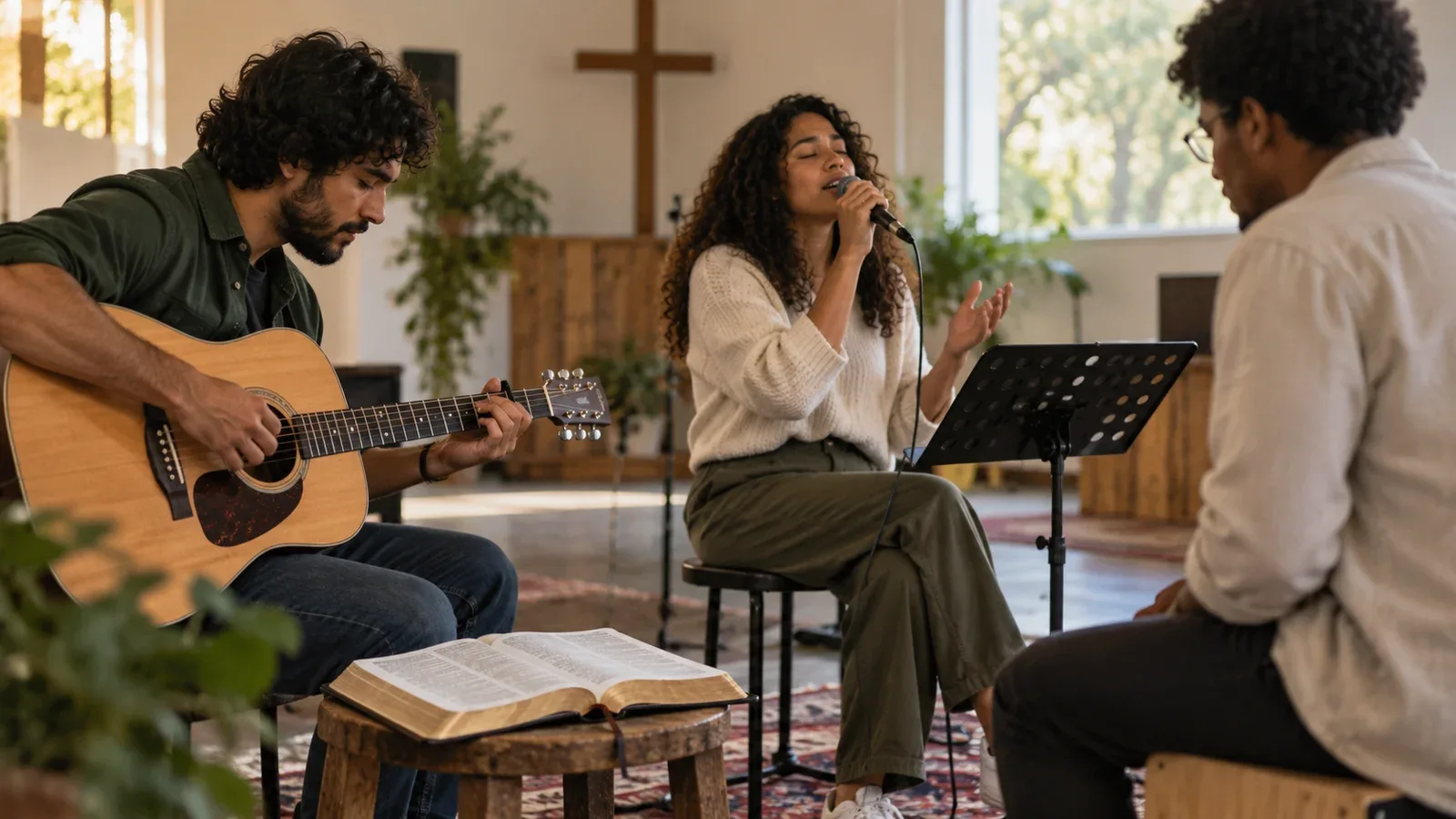
Must Christians choose between engaging culture and remaining faithful to the Bible? That question arises when churches adopt new language, artists experiment with formats, and believers participate in public life. It deserves more care than approving everything or rejecting every change.
Biblical faithfulness allows us to communicate faith in different settings, but it does not permit replacing the gospel with whatever wins approval. Culture provides forms of expression; Scripture remains the standard for evaluating their use.
Communication always happens in a context
We speak a language, use examples, and choose ways to teach. Even a simple gathering has cultural customs. Recognizing this helps us avoid confusing our preferred format with the only possible way to honor God.
In Acts 17:22–31, Paul begins with elements familiar to his Athenian audience. He engages their references while also confronting idolatry and announcing repentance and judgment. Making contact does not require erasing differences.
Examine both form and message
Changing the form does not necessarily change the content. A contemporary song can teach clearly. A traditional sermon can still distort a biblical passage.
Yet form is not always neutral. Methods that humiliate people, manipulate emotions, or make a message unintelligible deserve scrutiny. Calling the content good is not enough when the way it is communicated contradicts Christian care.
Three commitments for faithful participation
Preserve the gospel's center
1 Corinthians 15:1–4 places Christ's death and resurrection at the center of the message. An initiative can address social concerns, creativity, and personal challenges without reducing Jesus to a motivational symbol.
Ask what people are being invited to believe. Does the proposal point to Christ or merely offer a religious version of self-promotion?
Seek your neighbor's good
In 1 Corinthians 10:23–33, freedom and responsibility belong together in questions about food and conscience. Applied carefully, this principle helps us consider how choices affect other people.
For a musical presentation, that might involve understandable lyrics, dignified treatment of the team, and attention to accessibility. Care extends beyond the quality of what appears onstage.
Stay humble enough to make corrections
Romans 12:3–8 describes people with different gifts and urges a sober view of ourselves. Not every criticism is persecution, and not every innovation is progress.
A healthy culture can listen, test, and adjust. Admitting that a format did not work is not the same as abandoning faith.
An example: planning a music gathering
Before choosing songs and promotion, a team can discuss four questions:
- What do we want to communicate about God?
- Do the lyrics support that purpose biblically?
- Does the gathering encourage participation and care, or depend on elevating one person?
- How will we receive feedback and correct problems afterward?
These questions make creativity more responsible. They also keep the conversation from shrinking into arguments about preferred instruments, clothing, or styles.
Cultural engagement with Christian awareness
The Christian music and media world can provide opportunities for expression and service when its resources remain accountable to truth. Its value should not be measured only by reach or dismissed simply because it uses contemporary language.
Examine an initiative in which you participate and choose one concrete improvement. Faithfulness and creativity can work together when Christ remains central and people receive genuine care.
Biblical references are discussed through paraphrase; present-day situations apply the principles described.